Introduction
Running an e-commerce business involves much more than selling products. Once orders begin to grow, businesses must manage inventory, storage, picking, packing, shipping, returns, and the constant movement of products between suppliers, warehouses, and customers.
This is where third-party logistics, commonly known as 3PL, can make a major difference.
A 3PL fulfillment provider handles part or all of the logistics operations on behalf of a business. Instead of managing warehouse space, fulfillment staff, packing processes, and shipping operations internally, businesses can work with a logistics partner that manages these activities as part of a coordinated fulfillment operation.
For growing e-commerce brands, the right 3PL partner can reduce operational complexity, improve fulfillment efficiency, and provide the flexibility needed to expand into new markets.

What Is 3PL Fulfillment?
3PL fulfillment is a logistics service in which a business uses an external provider to manage inventory and order fulfillment activities.
The process typically begins when products arrive at the fulfillment facility. The logistics provider receives the inventory, checks and organizes it, and stores it until an order is placed.
When a customer places an order through an online store or marketplace, the fulfillment operation processes the order, picks the required products, packs them, and prepares the shipment for delivery.
Depending on the provider and the business requirements, 3PL services can also include receiving, storage, pick and pack, shipping, returns management, kitting, repackaging, labeling, Amazon FBA preparation, and freight coordination.
In simple terms, a 3PL partner becomes an extension of your logistics operation without requiring you to build and manage the entire infrastructure yourself.
How Does 3PL Fulfillment Work?
Although fulfillment operations vary between providers, the basic process usually follows a similar sequence.
Inventory arrives at the fulfillment facility.
Products are received, checked, and organized.
Inventory is stored until customer orders are received.
Orders are sent to the fulfillment operation.
Products are picked from storage.
Orders are packed according to the required specifications.
Shipping labels and documentation are prepared.
Shipments are handed to the appropriate carrier or freight service.
Tracking information is provided where available.
Returns can be received and processed as part of the fulfillment operation.
The goal is to create a reliable flow from inventory receiving to final delivery while reducing the amount of manual logistics work handled by the business owner or internal team.
What Services Does a 3PL Provide?
3PL providers can offer different combinations of logistics services depending on the needs of their customers.
Warehousing provides a place to receive and store inventory before it is needed for fulfillment.
Pick and pack services handle the process of selecting products from inventory, preparing customer orders, and packing them for shipment.
Fulfillment services coordinate the complete order process from receiving an order through preparation and shipping.
Freight and shipping services help businesses move products domestically or internationally using appropriate transportation solutions.
Returns management handles products coming back from customers and can include inspection, sorting, repackaging, restocking, or other required processing.
Additional services such as kitting, bundling, relabeling, repackaging, inspection, and FBA preparation can also be added when a business requires more specialized handling.

Why Do Businesses Use 3PL?
The main reason businesses use 3PL fulfillment is to make logistics easier to manage as operations grow.
Building an internal fulfillment operation requires warehouse space, equipment, employees, processes, shipping relationships, and ongoing management. These responsibilities can become increasingly difficult as order volume and inventory levels increase.
Working with a 3PL provider allows businesses to use an established fulfillment operation instead of building every part of the process themselves.
A 3PL can also provide flexibility when demand changes. Businesses may need more storage during peak periods, additional fulfillment capacity when sales increase, or new shipping solutions when entering another market.
For many growing brands, outsourcing logistics allows the internal team to spend more time on sales, marketing, product development, and customer growth while the fulfillment operation is handled by a dedicated logistics partner.
When Should You Consider 3PL?
There is no single order volume that determines when a business should move to 3PL fulfillment.
A business may consider using a 3PL when warehouse management is taking too much time, fulfillment is becoming difficult to handle internally, inventory is spread across multiple locations, or shipping operations are becoming more complicated.
Rapid growth is another common reason. When order volume increases quickly, an internal team may struggle to maintain consistent fulfillment speed and accuracy.
Businesses expanding internationally may also benefit from a logistics partner with access to warehousing, fulfillment, freight, and shipping solutions across multiple markets.
The right time to consider 3PL is usually when logistics has become an operational challenge rather than a simple task that the existing team can comfortably manage.
How to Choose a 3PL Partner
Choosing a 3PL provider should involve more than comparing storage or fulfillment prices.
Start by looking at the services the provider can actually support. Your logistics requirements may include warehousing, pick and pack, international shipping, FBA preparation, returns, or specialized handling.
You should also consider where your inventory is located, where your customers are located, and whether the provider can support your expected growth.
Operational visibility is important as well. Ask how inventory is managed, how orders are processed, how shipment information is handled, and how communication works when an issue occurs.
Finally, look at flexibility. A good 3PL relationship should be able to adapt as your products, order volume, sales channels, and markets change.
The best partner is not necessarily the cheapest provider. It is the provider whose capabilities, processes, communication, and service model fit the way your business operates.
3PL Fulfillment With 360CARTX
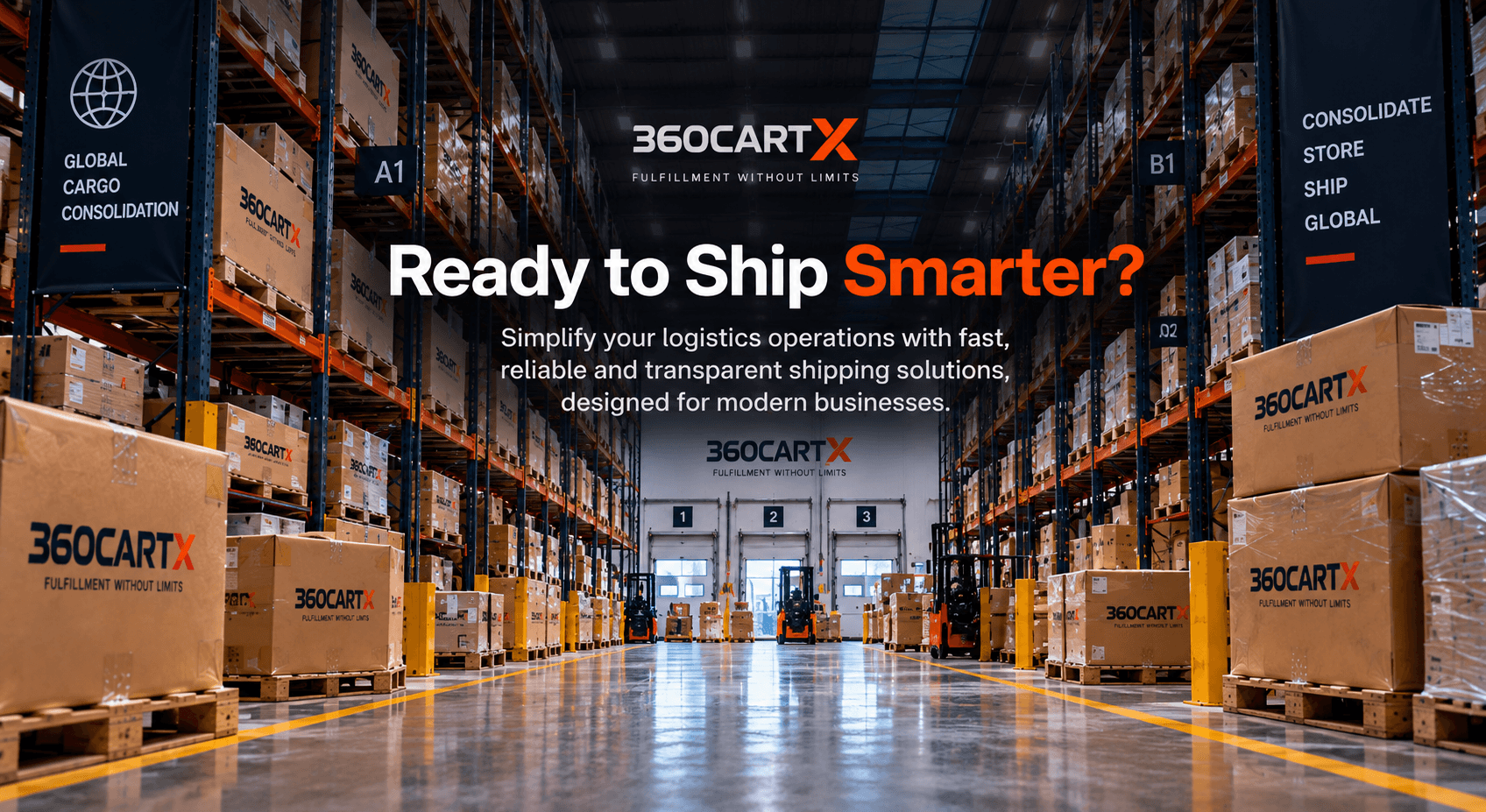
360CARTX helps businesses simplify the logistics work behind e-commerce by bringing warehousing, fulfillment, preparation, and shipping services together through one coordinated operation.
Our services cover core logistics needs including warehousing, fulfillment, pick and pack, Amazon FBA preparation, international freight and shipping, returns management, cargo consolidation, and dropshipping fulfillment.
The goal is simple: give growing businesses practical logistics support without making their operations unnecessarily complicated.
Whether you are storing inventory, fulfilling customer orders, preparing products for Amazon, consolidating cargo, or moving products across international markets, CartX is built to support the movement of your products from inventory to delivery.
If you are evaluating whether 3PL fulfillment is right for your business, you can explore our fulfillment services or request a quote based on your specific logistics requirements.
Suggested Blog