Introduction
Shipping inventory from China to Amazon FBA involves more than arranging transportation from a factory to an Amazon fulfillment center.
The complete process can involve supplier coordination, inventory receiving, product inspection, labeling, packaging, shipment preparation, international transportation, customs requirements, and final delivery into the Amazon fulfillment network.
For growing sellers, having a controlled logistics operation between the supplier and Amazon can make the process easier to manage.
Instead of treating international shipping and FBA preparation as separate tasks, sellers can organize them as one connected supply-chain process.

Step 1: Move Inventory From the Supplier to a Warehouse
A common starting point is moving finished inventory from the supplier to an external warehouse in China.
This creates a controlled location where the inventory can be received and prepared before international transportation.
The warehouse can:
• Receive products from the supplier.
• Count and organize inventory.
• Check product condition.
• Identify SKUs and quantities.
• Store inventory until the shipment is ready.
This can be especially useful when a seller works with multiple suppliers.
Instead of sending separate shipments directly toward Amazon, inventory can first be brought together and organized at one logistics location.
Step 2: Inspect and Prepare the Products
Before inventory leaves the warehouse, the products should be reviewed and prepared for their intended destination.
Depending on the product, preparation may include:
Checking quantities.
Inspecting product condition.
Verifying SKU information.
Checking product labels and barcodes.
Repackaging when required.
Applying required labels.
Completing other product-specific preparation.
This stage gives sellers an opportunity to identify problems before international transportation begins.
For a shipment traveling thousands of miles, correcting a problem before departure is generally much easier than trying to resolve it after the inventory is already in transit.
Step 3: Create and Prepare the FBA Shipment
Once the inventory is ready, the seller needs to prepare the shipment using Amazon's current FBA workflow.
This typically involves:
• Selecting the inventory to send.
• Confirming quantities.
• Preparing cartons.
• Providing required shipment information.
• Preparing carton or shipping labels.
• Confirming the transportation details.
Amazon's Send to Amazon workflow guides sellers through the shipment creation and preparation process.
The physical inventory should match the information associated with the shipment. Keeping the warehouse records and shipment information aligned is therefore an important part of the process.

Step 4: Consolidate Inventory When Needed
When products come from multiple suppliers, consolidation can make the logistics operation more organized.
An external warehouse can receive inventory from different suppliers and prepare it together when appropriate.
Consolidation can help with:
• Combining supplier shipments.
• Organizing products by SKU.
• Preparing FBA inventory together.
• Reducing unnecessary handling.
• Coordinating international transportation.
• Preparing larger or combined shipments when appropriate.
The exact approach depends on product characteristics, shipment requirements, timing, and transportation costs.
Consolidation should be used when it improves the overall logistics flow rather than simply combining everything into one shipment.
Step 5: Choose the Right Shipping Method
The best transportation method depends on the shipment's size, weight, urgency, destination, and cost requirements.
Common options include:
Air freight — generally suited to shipments where speed is important.
Ocean freight — often considered for larger shipments where transit time can be planned.
Express or parcel services — useful for smaller or time-sensitive shipments depending on the circumstances.
Other freight solutions — selected according to the shipment and destination requirements.
Businesses should evaluate transportation together with inventory planning.
The cheapest transportation option is not always the best option if a stockout is likely to occur while inventory is in transit.
Step 6: Manage the Information Flow
International FBA logistics involves both physical inventory and operational information.
A connected WMS and ERP workflow can help organize:
• SKU information
• Inventory quantities
• Warehouse locations
• Receiving records
• FBA replenishment requirements
• Shipment information
• Fulfillment activity
Keeping these records organized helps the warehouse and business team work from consistent information.
This becomes increasingly important when a seller has multiple SKUs, multiple suppliers, recurring FBA replenishment, or inventory moving through different stages of the supply chain.
Build a Reliable China-to-FBA Workflow
A well-organized China-to-FBA process can follow a simple structure:
Supplier manufactures and prepares the products.
Inventory moves to an external warehouse in China.
The warehouse receives and inspects the inventory.
Products are stored and organized.
FBA preparation and labeling are completed.
Inventory is consolidated when appropriate.
The FBA shipment is prepared and verified.
Inventory is shipped toward the Amazon fulfillment network.
This model gives sellers a controlled logistics point between the supplier and Amazon.
For international sellers, that control can help reduce avoidable preparation problems, improve inventory visibility, and make recurring replenishment easier to manage.
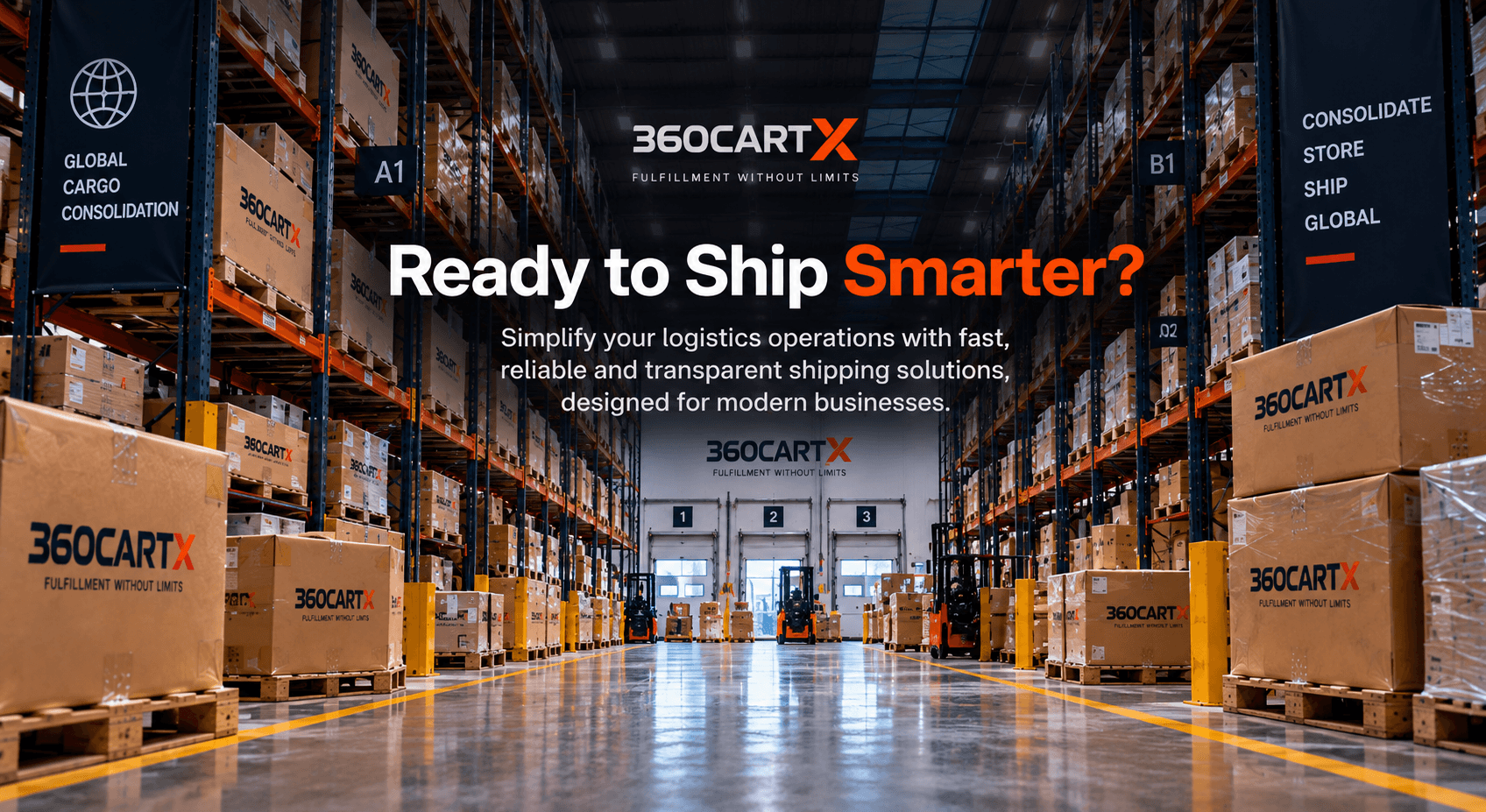
360CARTX provides warehousing, Amazon FBA preparation, inventory handling, cargo consolidation, international freight and shipping, and related logistics services for businesses moving products from China into the U.S. market.
The objective is to create a repeatable supply-chain process that connects supplier inventory, warehouse operations, transportation, and Amazon FBA.
Suggested Blog